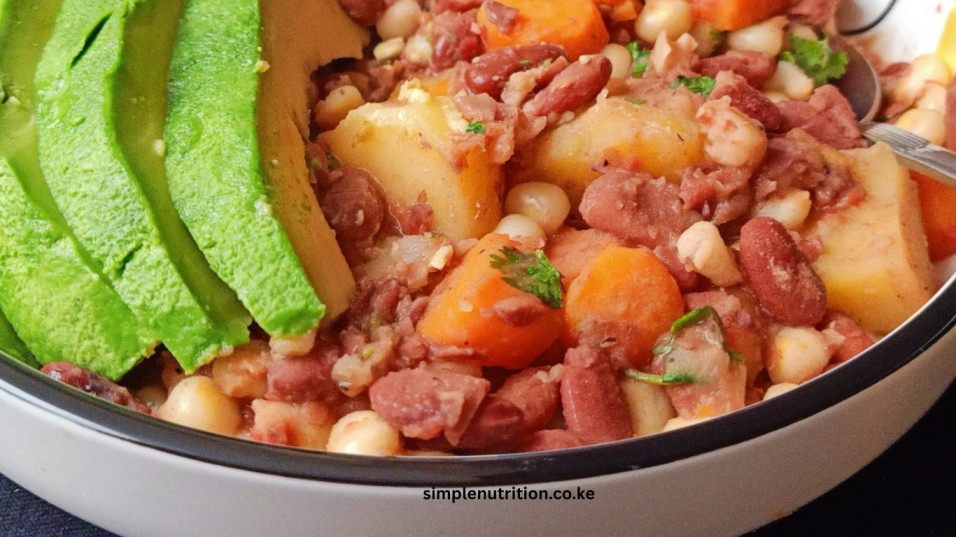

A nutritious twist on a Kenyan classic. This githeri combines maize and beans with plenty of vegetables, creating a filling meal with protein, fibre and complex carbohydrates—without needing lots of oil.
Ingredients
Serves 4
- 2 cups cooked githeri (maize and beans)
- 1 medium onion, chopped
- 2 medium tomatoes, chopped
- 1 medium carrot, diced
- 1 cup chopped cabbage
- 1 cup chopped sukuma wiki or spinach
- ½ cup green peas
- ½ hoho, diced
- 1 clove garlic, minced
- 1 teaspoon grated fresh ginger
- 2 teaspoons cooking oil
- ½ teaspoon curry powder
- ¼ teaspoon black pepper
- Small pinch of salt
- ½–1 cup water
- 2 tablespoons fresh dhania, chopped
- 1 teaspoon lemon or lime juice
How to Make It
- Heat the oil in a large sufuria over medium heat.
- Add the onion, garlic and ginger. Cook for 2 minutes.
- Add the tomatoes and cook for 3–4 minutes, until soft.
- Add the carrot, cabbage, hoho and peas. Stir and cook for about 3 minutes.
- Add the curry powder and black pepper.
- Stir in the cooked githeri and add ½ cup water.
- Cover and simmer gently for 8–10 minutes, allowing the flavours to combine.
- Add the sukuma wiki or spinach during the final 2–3 minutes.
- Turn off the heat and add the dhania and lemon/lime juice.
- Taste and adjust the salt if needed.
Nutrition Information
Approximate per serving: Nutrient Amount Calories ~360 kcal Protein ~14 g Carbohydrates ~62 g Fat ~7 g Fibre ~13 g
Values are estimates and depend on the maize-to-bean ratio and exact vegetable portions.
Key Nutrients
- Plant protein: Mainly from beans
- Fibre: Beans, maize and vegetables provide substantial fibre
- Folate: Beans and leafy vegetables contribute folate
- Iron: Beans and leafy greens provide plant-based iron
- Vitamin A: Carrots and leafy vegetables provide carotenoids
- Potassium: Beans and vegetables contribute potassium
- Vitamin C: Tomatoes, hoho and citrus juice contribute vitamin C
Nutritious Cooking Method: Boiling + Light Sautéing
The maize and beans are boiled until tender, while the vegetables are lightly sautéed using a small amount of oil before everything is combined.
This gives the githeri plenty of flavour without relying on excessive oil.
Secret Ingredient: Fresh Ginger
A little fresh ginger gives githeri a subtle warmth and makes the vegetable flavours stand out.
It is a simple way to add flavour without needing lots of salt.
Nutritionist’s Tip
Githeri is already a nutritious combination because maize provides carbohydrate while beans provide protein and fibre.
The easiest way to improve it further?
Add more vegetables.
Instead of making vegetables a tiny side dish, mix them directly into the githeri so that every serving contains a greater variety of nutrients.
For Weight Management
Githeri can be very filling because it contains both protein and fibre.
For a weight-management-friendly version:
- Increase the vegetables.
- Use a measured amount of oil.
- Keep your serving moderate.
- Avoid adding lots of extra fat such as butter or large amounts of oil.
You don’t need to avoid githeri because it contains maize. The overall portion and meal composition matter.
For Better Blood-Sugar Balance
Githeri can be a useful carbohydrate choice because beans provide fibre and protein alongside the maize.
To make the meal even more balanced:
- Add plenty of non-starchy vegetables.
- Keep the githeri portion sensible.
- Avoid sugary sauces.
- Drink water rather than a sugary beverage.
- If needed, add a protein source such as egg, fish or chicken.
Want More Protein?
Try adding:
- 1–2 boiled eggs
- Omena
- Grilled chicken
- A small serving of lean beef
- More beans in your maize-to-bean ratio
Simple Nutrition Snapshot
Preparation: 15 minutes if githeri is already cooked
Cooking: 15–20 minutes
Cost: Affordable
Best for: Lunch or dinner
Protein: Moderate
Fibre: High
Beginner-friendly: Yes
Meal-prep friendly: Excellent
The Simple Nutrition Takeaway
You don’t need to abandon traditional foods to eat healthier.
Githeri + more vegetables + sensible oil + a balanced portion can make an affordable, satisfying and nutrient-rich everyday meal.
Traditional food. Simple upgrade. Better nutrition.
Discover more from Simple Nutrition
Subscribe to get the latest posts sent to your email.