
Many nutrition tips assume that everyone has a large refrigerator and plenty of storage space.
The reality is that many students, young professionals, and families either don’t have a fridge or have very limited refrigeration.

Does that mean healthy eating is impossible?
Absolutely not.
With a little planning, you can still enjoy balanced, nutritious meals while reducing food waste and saving money.
Here’s how to meal plan when you don’t have a refrigerator.
Start with Foods That Don’t Need Refrigeration
The easiest way to meal plan without a fridge is to focus on foods that naturally have a long shelf life.
Some excellent Kenyan staples include:
Grains and Starches
- Rice
- Ugali flour (maize flour)
- Wholemeal flour
- Oats
- Millet
- Sorghum
- Pasta
- Sweet potatoes
- Arrowroots (nduma)
Legumes
- Beans
- Green grams (ndengu)
- Cowpeas
- Lentils
- Chickpeas
Healthy Fats
- Groundnuts
- Natural peanut butter
- Pumpkin seeds
- Sunflower seeds
These foods can be stored safely in airtight containers in a cool, dry place.
Buy Fresh Produce in Smaller Quantities
Without refrigeration, avoid buying vegetables and fruits that will sit for several days.
Instead, buy enough for one to three days.
Fresh produce that often keeps well includes:
- Onions
- Tomatoes
- Cabbage
- Carrots
- Green bananas
- Oranges
- Apples
- Avocados (buy at different stages of ripeness)
Shopping more frequently may actually reduce food waste.
Choose Proteins Wisely
Fresh meat and fish spoil quickly without refrigeration.
Instead, consider:
- Eggs (store according to local guidance and how they are sold)
- Dried beans
- Ndengu
- Lentils
- Canned fish
- Shelf-stable UHT milk
- UHT plain yoghurt, if available before opening
If you buy fresh meat or fish, cook it the same day.
Cook Only What You Need
One of the biggest challenges without a fridge is storing leftovers safely.
Instead of cooking for several days, prepare only the amount your household will eat at one meal.
This helps reduce:
- Food waste
- The risk of foodborne illness
- Reheating leftovers multiple times
Meal plan Around Similar Ingredients
Buying ingredients that can be used in different meals saves money.
For example:
| Ingredient | Use It For |
|---|---|
| Tomatoes | Stews, salads, eggs, vegetable dishes |
| Onions | Beans, rice, soups, stir-fries |
| Sukuma wiki | Lunch, dinner, wraps, omelettes |
| Beans | Githeri, bean stew, bean salad |
| Eggs | Breakfast, lunch, dinner |
This approach keeps your shopping simple.
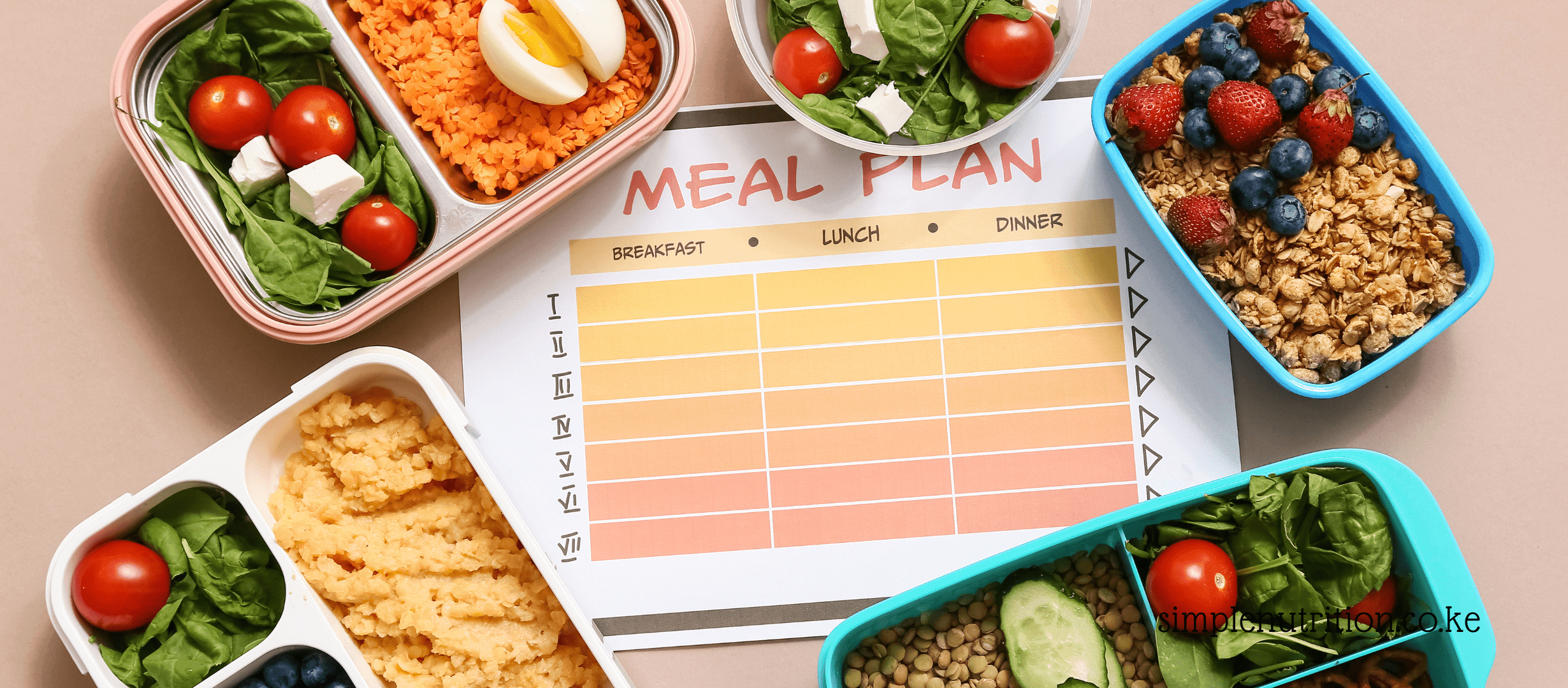
Have a Flexible Weekly Plan
Here’s an example using foods that don’t rely heavily on refrigeration.
| Day | Breakfast | Lunch | Dinner |
|---|---|---|---|
| Monday | Oat porridge with banana | Beans and rice | Sukuma wiki with ugali |
| Tuesday | Boiled eggs and sweet potatoes | Ndengu and chapati | Vegetable stir-fry with rice |
| Wednesday | Millet porridge | Githeri | Bean stew with ugali |
| Thursday | Wholemeal bread with peanut butter | Rice and vegetables | Sweet potatoes with eggs |
| Friday | Oats with groundnuts | Lentil stew | Ugali with cabbage and beans |
Adjust the meals based on what’s available and your family’s preferences.
Store Food Properly
Even without a fridge, proper storage matters.
Keep dry foods in:
- Airtight containers
- Clean shelves
- A cool, dry place
- Away from direct sunlight
This helps prevent pests and keeps food fresh for longer.
Pack Safe Lunches for Work
If you’re taking lunch to work, use an insulated lunch bag whenever possible.
Good options include:
- Bean stew with chapati
- Githeri
- Rice with vegetables
- Peanut butter sandwiches
- Whole fruits
- Roasted groundnuts
Avoid leaving cooked food at room temperature for many hours, especially in hot weather.
Reduce Food Waste
A little planning can make a big difference.
Try to:
- Shop with a list.
- Buy only what you’ll use.
- Use older produce first.
- Cook appropriate portions.
- Turn extra vegetables into soup or stew the same day.
Affordable Foods to Always Keep at Home
| Food | Why It’s Useful |
|---|---|
| Oats | Quick breakfast |
| Beans | Affordable protein |
| Ndengu | High in protein and fibre |
| Rice | Versatile staple |
| Ugali flour | Easy to prepare |
| Groundnuts | Healthy snack |
| Peanut butter | Protein and healthy fats |
| Sweet potatoes | Nutritious carbohydrate |
| Eggs | Quick source of protein |
| Onions and tomatoes | Base for many meals |
Common Mistakes to Avoid
- Buying too many perishable foods at once.
- Cooking several days’ worth of meals without safe storage.
- Leaving cooked food at room temperature for long periods.
- Forgetting to check food for signs of spoilage.
- Shopping without a plan.
Remember!
Not having a fridge doesn’t mean you can’t eat well. With thoughtful planning, smart shopping, and proper food handling, you can prepare nutritious, affordable meals using everyday Kenyan foods.
Focus on shelf-stable staples, buy fresh produce in smaller amounts, cook what you need, and use ingredients creatively throughout the week.
Healthy eating isn’t about having the perfect kitchen—it’s about making the best use of the resources you have.
Food safety note: If cooked food has been left at room temperature for several hours—especially in hot weather—it may no longer be safe to eat. When in doubt, it’s safer to discard it than risk food poisoning.
Discover more from Simple Nutrition
Subscribe to get the latest posts sent to your email.