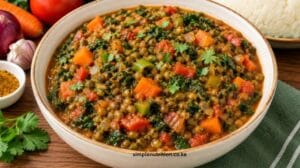

A hearty, affordable Kenyan-style stew made with green grams (ndengu), tomatoes and vegetables. Ndengu are naturally rich in plant protein and fibre, making this a satisfying meat-free meal that works well for lunch or dinner.
Ingredients — 2 servings
- 1 cup cooked green grams (ndengu)
- 1 medium tomato, chopped
- ½ medium onion, chopped
- 1 medium carrot, diced
- 1 cup chopped spinach or sukuma wiki
- ½ medium bell pepper (hoho), chopped
- 1 small clove garlic, minced
- 1 teaspoon grated fresh ginger
- 1 teaspoon cooking oil
- ½ teaspoon curry powder
- ¼ teaspoon black pepper
- Small pinch of salt
- 1–1½ cups water
To Serve
Choose one:
- 1 small boiled sweet potato
- ½–¾ cup cooked brown rice
- 1 small serving of ugali
- 1 small boiled arrowroot
How to Make It
- If using dried ndengu, soak them and cook until tender before preparing the stew.
- Heat the oil in a saucepan over medium heat.
- Add the onion and cook until softened.
- Add the garlic and ginger and cook for about 30 seconds.
- Add the chopped tomatoes and cook until they soften and form a thick sauce.
- Add the carrot, hoho, curry powder and black pepper.
- Stir for 1–2 minutes.
- Add the cooked ndengu and water.
- Cover and simmer for about 10–15 minutes, allowing the flavours to combine.
- Add the sukuma wiki or spinach during the last few minutes of cooking.
- Add a small amount of salt to taste.
- Serve hot with your preferred carbohydrate.
Nutrition Information
Approximate nutrition for 1 serving of stew, without the accompanying carbohydrate: Nutrient Amount Energy ~300 kcal Protein ~17 g Carbohydrates ~43 g Fat ~7 g Fibre ~14 g
Values are estimates and will vary depending on the amount of oil and vegetables used.
Adding ugali, rice, sweet potato or arrowroot will increase the total energy and carbohydrate content of the meal.
Key Nutrients
Plant protein: Ndengu provide a useful source of plant-based protein.
Fibre: Green grams and vegetables make this stew particularly rich in fibre, which supports digestive health and contributes to fullness.
Folate: Green grams and leafy vegetables provide folate, an important nutrient involved in normal cell division and blood formation.
Iron: Ndengu and leafy vegetables contribute non-haem iron.
Potassium: Green grams and vegetables provide potassium, which is important for normal muscle and nerve function.
Nutritious Cooking Method: Gentle Simmering
This recipe uses gentle simmering rather than deep-frying the ingredients.
Only a small amount of oil is used to soften the aromatics and develop flavour. Once the ndengu are added, the stew cooks in water and tomato rather than relying on large amounts of oil.
This keeps the meal flavourful while helping control the amount of added fat.
Secret Ingredient: Fresh Ginger
The secret ingredient is fresh ginger.
Ginger adds warmth and depth of flavour to the stew, meaning you don’t need to rely heavily on salt or processed seasoning.
It also contains naturally occurring bioactive compounds called gingerols.
You only need a small amount to make a noticeable difference to the flavour.
Nutritionist’s Tip
Plant protein works best as part of a balanced meal.
Ndengu are an excellent addition to a healthy diet, but remember that a balanced meal isn’t just about protein.
Combine your ndengu stew with:
½ plate vegetables + ¼ plate ndengu + ¼ plate carbohydrate
For example, serve the stew with plenty of sukuma wiki and a modest portion of ugali or sweet potato.
For Weight Management
Ndengu can be particularly useful when you’re trying to manage your weight because their combination of protein and fibre can help make meals more satisfying.
The main thing to watch is the amount of cooking oil and the portion of accompanying starch.
You don’t need to eliminate ugali or sweet potatoes. Focus on getting the proportions right.
For Better Blood-Sugar Balance
This meal can be made more blood-sugar friendly by:
- Keeping the ndengu-to-starch ratio generous.
- Adding plenty of non-starchy vegetables.
- Choosing a moderate portion of ugali, rice or sweet potato.
- Avoiding sugary drinks alongside the meal.
- Using minimal added oil.
If you have diabetes, individual carbohydrate needs vary, so portions should be tailored to your overall meal plan.
Want More Protein?
Add a boiled egg on the side or serve the stew with a small portion of plain yoghurt.
If you’re vegetarian, increasing the portion of ndengu is another simple option.
Simple Nutrition Snapshot
Preparation: Easy
Time: 30–45 minutes if using pre-cooked ndengu
Cost: Affordable
Best for: Lunch or dinner
Cooking skill: Beginner-friendly
Meal type: High-fibre, plant-based
The Simple Nutrition Takeaway
Affordable food can still be highly nutritious.
Ndengu are a good example of a familiar Kenyan food that provides protein, fibre, iron and other important nutrients at a relatively affordable price.
You don’t need meat at every meal to build a nutritious plate. A well-prepared combination of ndengu, vegetables and a sensible portion of your preferred carbohydrate can make a satisfying and balanced meal.
Discover more from Simple Nutrition
Subscribe to get the latest posts sent to your email.